Historic Carbon Stain Removal from Sandstone in Newcastle upon Tyne
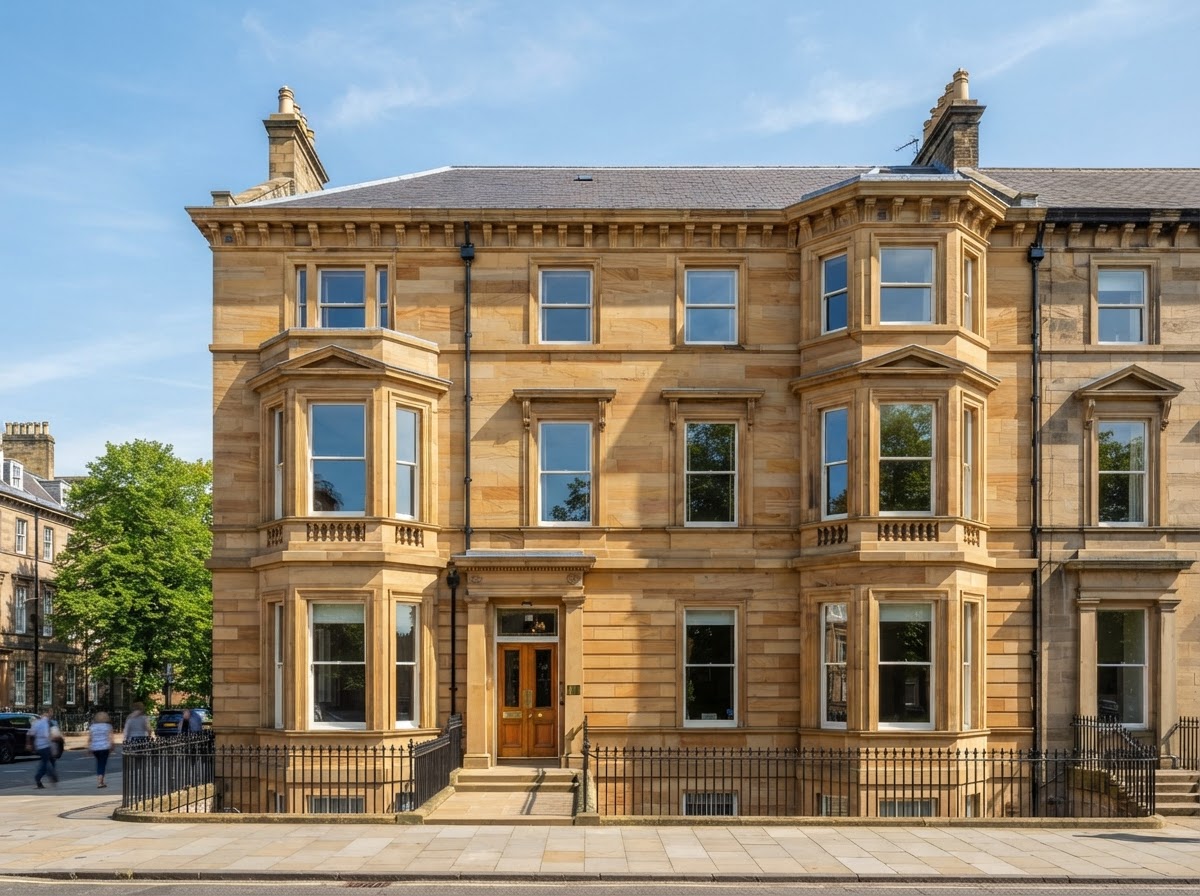 After
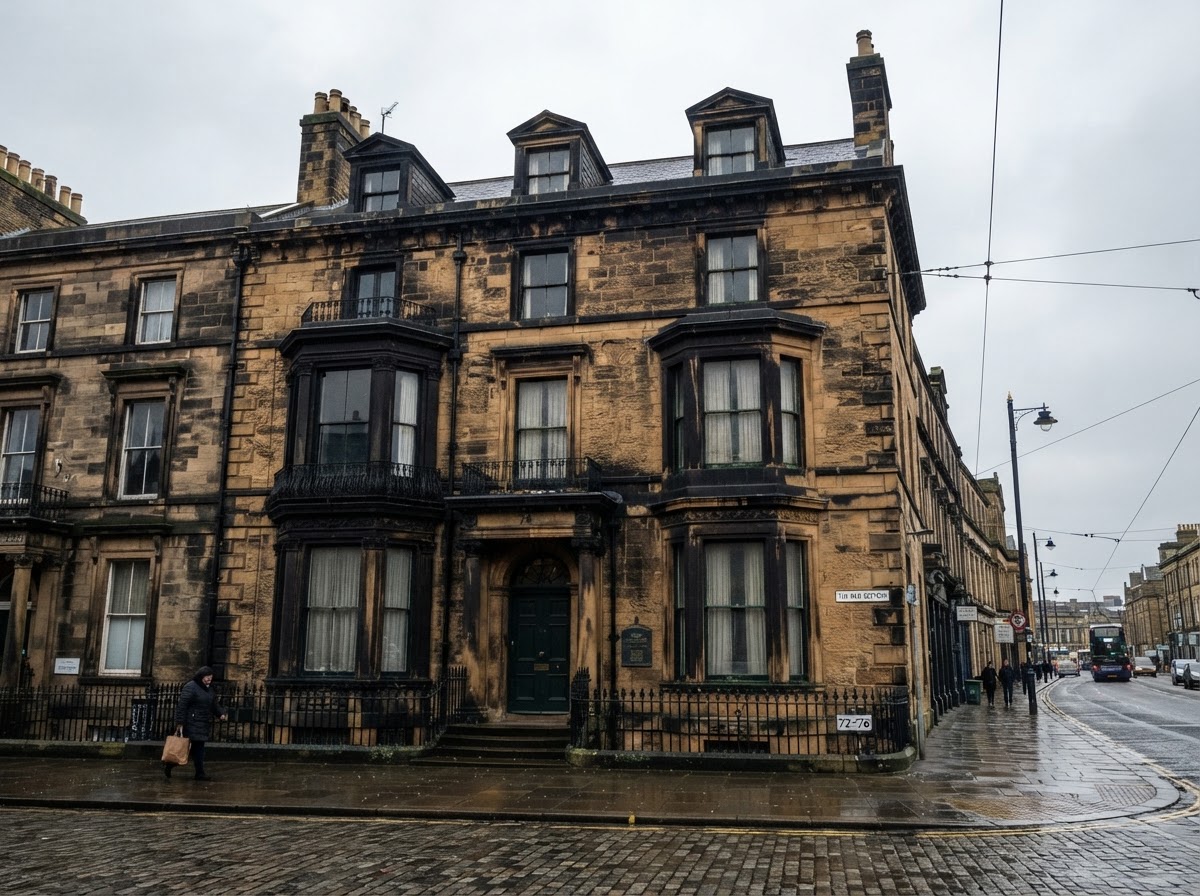 Before
Project Overview
Supreme Exterior Clean was commissioned to restore the appearance of a 160-year-old sandstone property in Newcastle upon Tyne that had become heavily discoloured by decades of atmospheric pollution.
The traditional stone building was situated alongside the original route of the A1, a major road that had historically carried substantial volumes of traffic through the area.
Combined with the widespread use of coal for domestic heating and industrial activity during the property's long history, this had contributed to extensive black carbon staining across the sandstone façade.
Over many decades, soot, vehicle emissions and other atmospheric pollutants had accumulated on the surface of the stone, gradually obscuring its original warm, golden appearance.
The homeowner wanted to improve the appearance of the property and restore the natural character of the sandstone.
Our task was to remove as much of the historic carbon contamination as possible while preserving the integrity of the 160-year-old masonry and its recently renewed mortar joints.
Using a combination of specialist chemical cleaning and low-pressure DOFF steam cleaning, we successfully restored both the front and rear elevations in a single working day.
The Challenge: Decades of Historic Carbon Staining
Black staining is a familiar feature of many older sandstone buildings throughout Newcastle and the wider North East of England.
Although it can sometimes be mistaken for ordinary dirt, the contamination often has a much more complex origin.
1. Historic Coal Burning and Industrial Pollution
During the 19th and much of the 20th century, coal was one of the principal sources of energy for domestic heating, manufacturing and industry.
The widespread burning of coal released substantial quantities of soot and other airborne pollutants into the atmosphere.
These contaminants settled on buildings, gradually accumulating on external stonework over many years.
On porous materials such as sandstone, the deposits can become particularly difficult to remove.
Even though coal burning has declined significantly and air quality has improved, the historic contamination remains visible on countless older buildings.
2. Vehicle Emissions from the Former A1
This particular property had an additional source of atmospheric contamination.
Its position alongside the former route of the A1 meant that it had been exposed to vehicle-related pollution over many decades.
Exhaust emissions, airborne particulates and road-related contamination had contributed to the dark deposits accumulating across the sandstone.
The combination of historic coal pollution and prolonged exposure to vehicle emissions had resulted in particularly stubborn black staining.
3. Deeply Established Surface Contamination
The staining was not simply loose dirt sitting on the surface.
Over several decades, carbon-rich deposits had become firmly attached to the textured sandstone.
Some sections of the building were almost completely black, particularly around the upper storey, window openings and projecting architectural features.
The contrast between the blackened stone and the remaining exposed golden sandstone was particularly noticeable.
Conventional cleaning methods would have been unlikely to achieve the required improvement without specialist treatment.
Why Cleaning Historic Sandstone Requires Specialist Knowledge
Sandstone is a naturally porous building material, and its properties can vary considerably depending on its mineral composition, age and condition.
Some sandstone is relatively durable, while other varieties can be vulnerable to surface erosion, abrasion and inappropriate chemical treatments.
Historic buildings require particular care because the original stone may already have experienced more than a century of weathering.
Aggressive pressure washing can remove weakened surface material, alter the texture of the stone or damage vulnerable mortar joints.
Inappropriate chemical treatments can also cause discolouration or reactions with the minerals present in the masonry.
For these reasons, the objective was not simply to remove the black staining as quickly as possible.
Our priority was to achieve a substantial improvement in the appearance of the sandstone while avoiding unnecessary damage to the original building materials.
Fortunately, the sandstone at this property was in good overall condition, and the masonry had recently been repointed.
Nevertheless, the new mortar joints required particular attention when selecting the cleaning method.
Our Solution: Specialist Chemical Cleaning and DOFF Steam Treatment
After assessing the nature of the contamination and the condition of the stone, we selected a combined chemical and DOFF cleaning process.
This approach was chosen to address the stubborn carbon deposits while limiting the mechanical force applied to the sandstone.
Stage 1: Preparation and Protection of Surrounding Surfaces
Before cleaning commenced, we prepared the working area and protected vulnerable surfaces.
One of the most important considerations was the property's glass windows. The specialist chemical treatment selected for the carbon staining contained hydrofluoric acid, a highly hazardous substance that can also attack glass and other susceptible materials.
Particular care was therefore required to prevent the treatment from contacting the windows.
The glazing was covered with protective plastic sheeting, which was carefully secured and taped into position.
This preparation was an important part of the project, allowing the chemical treatment to be confined to the intended masonry surfaces.
Stage 2: Specialist Chemical Treatment
Historic carbon contamination can be extremely difficult to remove using water-based cleaning alone.
For this project, a specialist hydrofluoric acid-based cleaning treatment was used to help break down the firmly attached deposits.
The chemical was applied in a controlled manner to the affected sandstone.
Unlike a general-purpose exterior cleaning solution, this treatment required specialist knowledge of chemical hazards, material compatibility and suitable protective measures.
Its purpose was to loosen the established contamination so it could subsequently be removed using the DOFF cleaning system.
The effectiveness of this process depended on the interaction between the chemical treatment and the carbon-rich deposits, rather than relying on aggressive mechanical force to strip the staining from the stone.
Stage 3: Low-Pressure DOFF Steam Cleaning
Following the chemical treatment, the affected areas were cleaned using a DOFF steam cleaning system.
DOFF cleaning technology uses high-temperature water delivered at controlled pressure to remove contamination from building surfaces.
One of its advantages is the ability to use heat to assist cleaning without necessarily requiring the high mechanical pressure associated with conventional pressure washing.
For this property, low-pressure operation was particularly important.
Although the sandstone was in generally good condition, the building had recently been repointed, and we wanted to minimise the risk of disturbing the mortar joints.
The DOFF system enabled us to remove loosened contamination while carefully controlling the cleaning process.
This combination of chemical treatment and heated water cleaning proved particularly effective against the historic black deposits.
Stage 4: Additional Treatment of Stubborn Areas
As the work progressed, it became apparent that some sections of the building had accumulated more deeply established contamination than others.
The staining was particularly stubborn in areas where the deposits had built up over many decades.
These sections required additional treatment to achieve the best practicable result.
Rather than relying on increasingly aggressive pressure, we repeated the controlled cleaning process where necessary.
This allowed us to progressively remove the contamination while maintaining our focus on preserving the sandstone surface.
Our objective was to remove the carbon deposits that could be treated effectively without causing unacceptable damage to the underlying masonry.
Stage 5: Cleaning the Complete Front and Rear Elevations
The cleaning programme covered both the front and rear elevations of the property.
Access to the upper sections was achieved using ladders, enabling our technician to work across the affected areas.
Throughout the project, attention was given to the sandstone blocks, window surrounds, projecting stone features and recently repointed joints.
The combination of careful surface preparation, specialist chemical treatment and low-pressure steam cleaning allowed the work to be completed within a single day.
The Results: Revealing 160 Years of Sandstone Character
The transformation was dramatic.
Before cleaning, much of the sandstone was covered by dark carbon staining that concealed the natural colour and character of the building.
Following treatment, the warm golden tones of the sandstone became clearly visible once again.
The most significant improvement was seen across the upper sections of the façade, where the heavy black deposits had previously dominated the property's appearance.
The cleaning also revealed the variations in colour, texture and natural character of the individual sandstone blocks.
Although we removed the contamination that could be effectively treated chemically, we did not attempt to force the removal of every remaining dark mark at the expense of the stone's condition.
The completed work provided a substantial visual improvement while retaining the authentic appearance of the historic masonry.
Both elevations were cleaned by a single specialist technician in one working day.
The homeowner was extremely pleased with the finished results.
What had previously appeared to be a heavily blackened stone property was transformed into a much brighter and more attractive building, with its original sandstone character once again becoming the dominant feature.
Expert Insight: Why Are So Many Sandstone Buildings in the North East Black?
Many older sandstone buildings in Newcastle, Gateshead, Durham and Northumberland have a distinctive dark appearance.
In some cases, the stone was originally much lighter in colour.
The black staining developed gradually as a consequence of the region's industrial history, domestic coal burning and atmospheric pollution.
The Legacy of Coal
For generations, coal was widely used to heat homes and power industrial activity.
Chimneys released soot and combustion products into the surrounding atmosphere.
These particles settled on external building surfaces, particularly in urban areas where buildings were exposed to persistent pollution.
Over time, the contamination accumulated on stonework, producing the familiar dark appearance seen on many historic properties.
The Influence of Road Traffic
Vehicle emissions also contributed to atmospheric staining, especially on buildings situated alongside busy roads.
This was particularly relevant to the Newcastle property featured in this case study because of its location on the former A1 route.
Repeated exposure to airborne pollution over several decades contributed to the heavy carbon deposits affecting the sandstone.
Why Doesn't the Staining Simply Wash Away?
Unlike loose surface dirt, historic atmospheric contamination can become strongly attached to porous and textured masonry.
Fine particles may accumulate within surface irregularities, while some pollution deposits can form more resistant crusts.
Rainfall alone is often insufficient to remove this type of contamination.
In fact, weather exposure can sometimes produce uneven staining patterns, with sheltered areas retaining deposits for longer than surfaces exposed to regular rainwashing.
This is one reason that specialist masonry cleaning methods are often required.
Will the Black Staining Return After Cleaning?
Modern air quality is generally much improved compared with the period when coal was widely burned for domestic heating and industrial purposes.
Consequently, the historic levels of soot deposition responsible for much of the original blackening are less prevalent today.
This means that once decades of accumulated pollution have been removed, the same degree of staining may take considerably longer to develop again.
However, natural stone remains exposed to traffic-related particles, airborne dirt and other environmental contaminants.
Future discolouration is therefore still possible, and no exterior cleaning process can permanently prevent atmospheric staining.
The Importance of Preserving Historic Stonework
Older sandstone buildings form an important part of the architectural character of Newcastle and the North East.
Their stone façades often contain craftsmanship, detailing and natural material characteristics that deserve careful treatment.
When undertaking restoration cleaning, it is important to distinguish between removing harmful or unwanted contamination and unnecessarily altering the original material.
Excessively aggressive cleaning can permanently change the appearance and texture of natural stone.
At Supreme Exterior Clean, we recognise that successful stone restoration is not simply about achieving the lightest possible colour.
It is about selecting an appropriate cleaning method for the material, contamination and condition of the building.
This project demonstrates how specialist chemical cleaning, carefully controlled DOFF steam treatment and appropriate surface protection can be combined to achieve a significant transformation.
The result was the restoration of the property's natural sandstone appearance without the need to replace or mechanically abrade the historic stonework.
Have a similar property requirement?
Contact Supreme Exterior Clean to arrange an assessment of your property and discuss the most appropriate cleaning solution.