Pressure Washing
Professional pressure washing for hard surfaces where it is safe to do so. We match the pressure, flow, nozzle and distance to the material — so we clean effectively without abrading the surface.
What is pressure washing, and who is it for?
Pressure washing uses water delivered through specialist equipment at a controlled pressure. The mechanical force of the water helps dislodge and remove dirt, debris, biological growth and other unwanted materials from surfaces.
Our professional pressure washing service is used where contamination can be removed mechanically and the underlying surface is sufficiently robust to tolerate it safely.
We match the equipment and settings to the material and task — there is no single setting suitable for every surface.
Common causes of surface soiling
- Dirt, mud and loose debris.
- Algae, moss and biological growth on hard surfaces.
- Atmospheric pollution and traffic film.
- Oil, grease and construction residues.
Relevant surfaces and materials
- Concrete paving.
- Block paving.
- Suitable natural stone.
- Tarmac and hardstanding (with appropriate technique).
Our cleaning methods, equipment and chemicals
Pressure washing is not inherently aggressive. It becomes aggressive when the equipment and settings produce more mechanical force than the surface can safely withstand.
We assess the material, contamination and desired result before selecting the pressure, flow, nozzle and distance. Our methods may include:
- Professional pressure washing: Commercial-grade equipment with adjustable pressure and flow settings.
- Rotary surface cleaning: Specialist surface cleaners for consistent results across suitable paved areas.
- Softwashing and chemical treatments: To remove biological contamination from delicate or heavily affected surfaces.
- Oil and grease treatments: Specialist degreasers for suitable driveway and commercial surfaces.
- Jointing sand replacement: Re-sanding suitable block paving after cleaning and drying.
Why method selection matters
Excessive water pressure can cause permanent damage to materials that aren't capable of withstanding the force — scoring render, eroding softer stone, damaging mortar joints or disturbing roof tiles.
Conversely, some deposits require mechanical force to remove effectively, and a chemical treatment alone may not be sufficient.
The correct method is determined by what needs removing and what material lies underneath it. Sometimes the best solution combines specialist chemical treatment with controlled pressure washing.
What to expect and recommended cleaning frequency
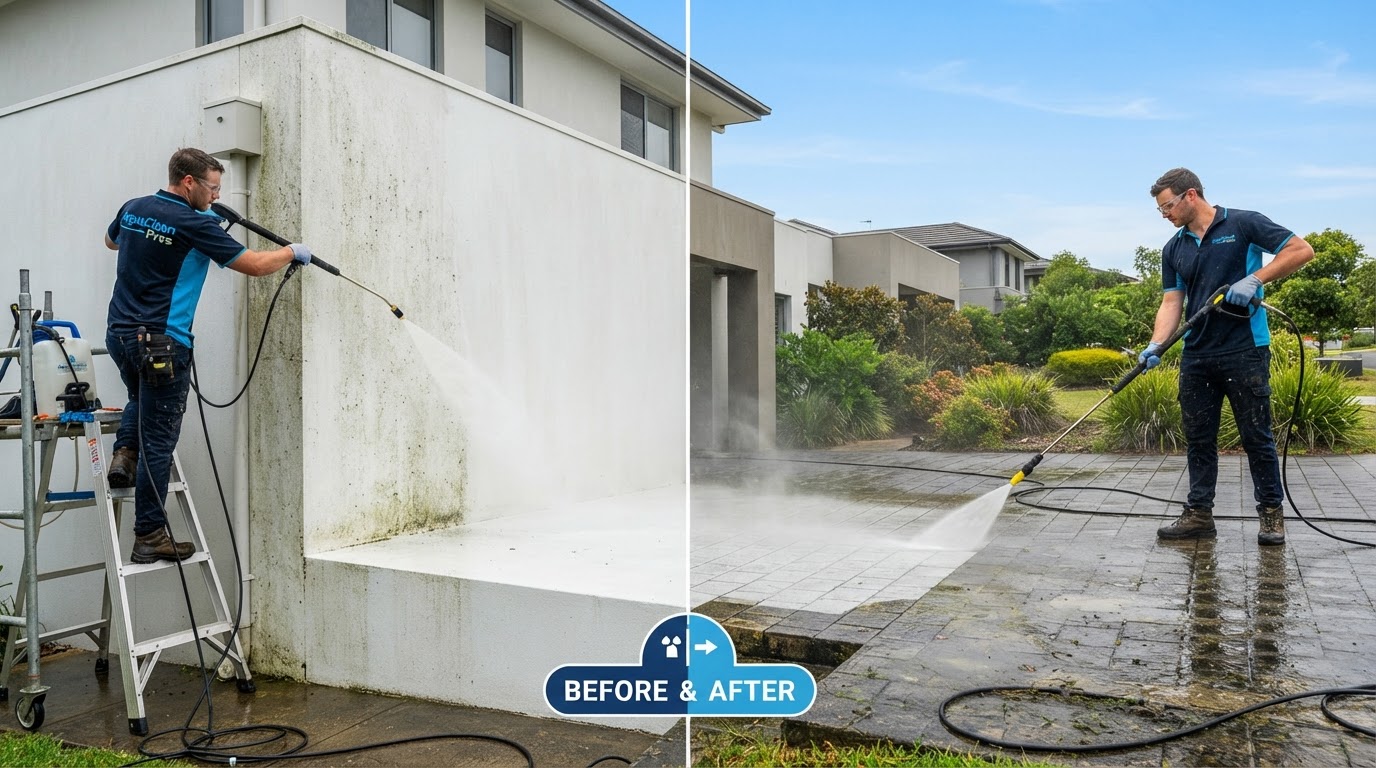
Most suitable hard surfaces show an immediate and often dramatic improvement after professional cleaning.
Stubborn black spots, oil deposits and deeply absorbed staining may require additional treatments, and some permanent discolouration or surface wear may remain visible.
Recommended frequency: Every 12–24 months for most residential patios and driveways, with more frequent attention where shaded conditions, heavy use or biological growth make it necessary.
Maintenance and aftercare
- Regular maintenance can prevent contamination becoming heavily established and make subsequent cleaning easier.
- Where appropriate, we can discuss protective sealing to help reduce future staining and simplify ongoing maintenance.
- Pressure washing can remove loose jointing material, which may need replacing once the surface has dried.
Knowledge Centre
Related Educational Articles
Read more about the surface, the contamination and the right approach.
Questions
Frequently Asked Questions
Pressure Washing
Request a Pressure Washing Assessment
Tell us about the surface or issue and we will advise on the right approach for your property.
- 1The Issue
- 2Photos & Access
- 3Your Details