Commercial Roof & Cladding Cleaning in Gateshead – Industrial Property Dilapidations Project
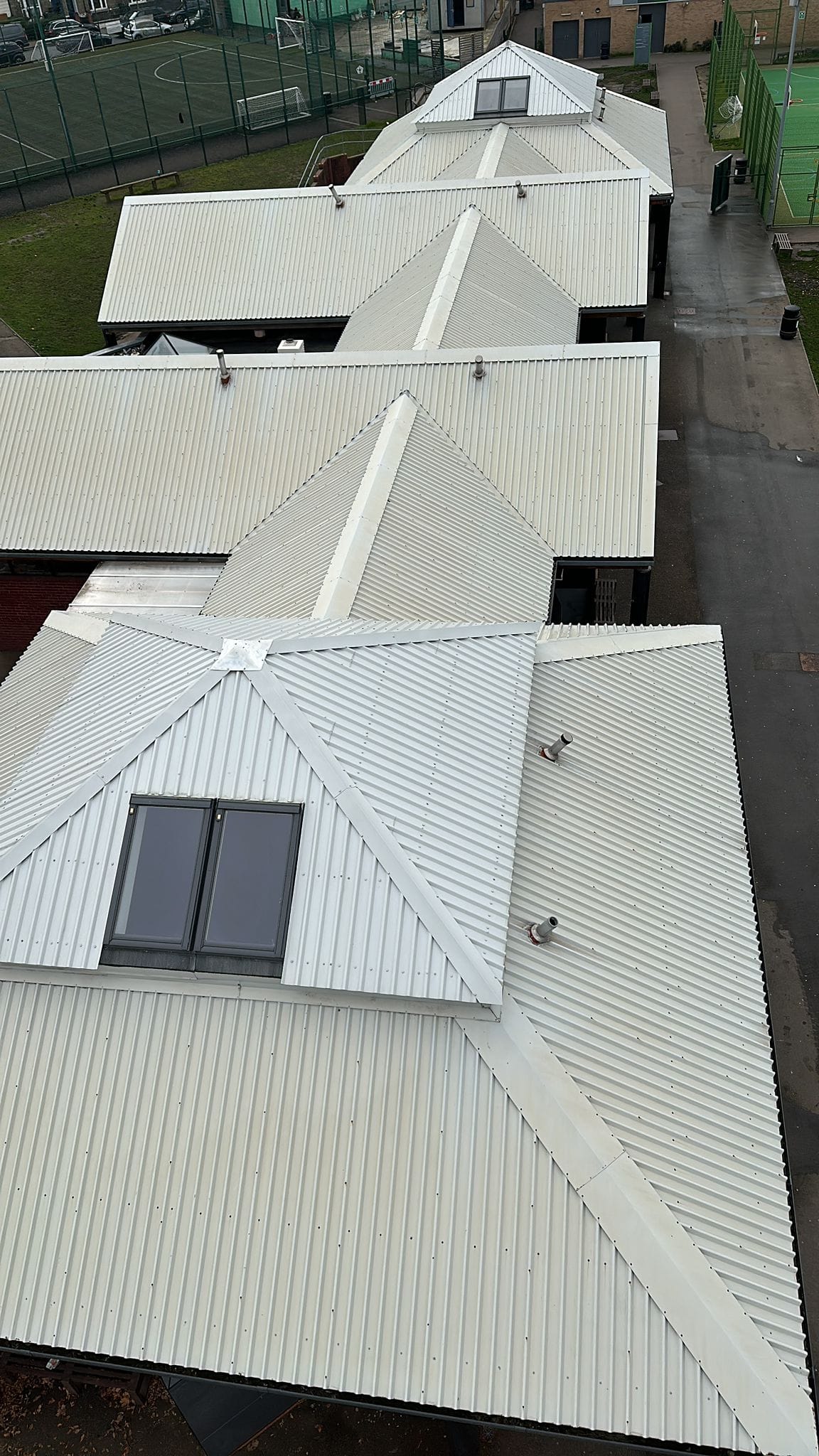 After
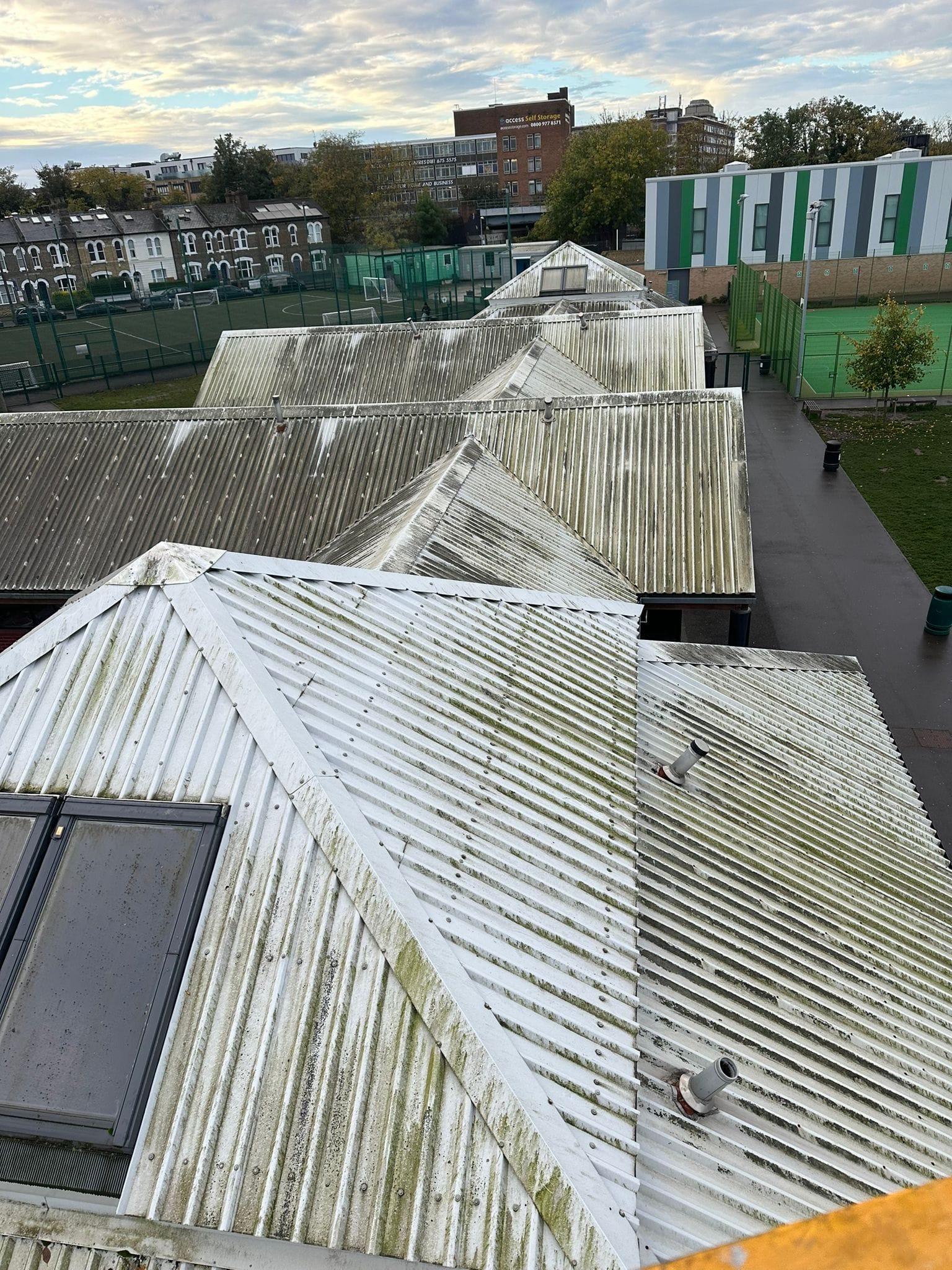 Before
Project Overview
Supreme Exterior Clean was appointed by Transvalair UK Ltd to undertake specialist roof and cladding cleaning at their former industrial premises in Follingsby Park, Gateshead.
The work formed part of a wider commercial property dilapidations programme, which required the outgoing tenant to address various maintenance and reinstatement obligations before handing the premises back.
After approximately 15 years of occupation without the roof receiving professional cleaning, the building's exterior had accumulated substantial levels of dirt and biological contamination.
The once light-coloured, powder-coated steel roofing had become heavily discoloured, with green algae and dark deposits particularly noticeable across the profiled sheets.
Our responsibility was to clean approximately 230m² of roofing and external cladding, together with clearing the building's gutters, helping return the property's exterior to the condition required under the agreed dilapidations works.
The project was completed by two technicians over two days, with the finished results meeting the client's dilapidations requirements.
The Challenge: Fifteen Years of Accumulated Contamination
Commercial and industrial buildings are continually exposed to environmental conditions that can gradually affect the appearance of their external surfaces.
Over time, atmospheric deposits, airborne dirt and biological growth can accumulate on roofing and cladding, particularly where regular maintenance has not been undertaken.
At the Transvalair premises, the roof had not been professionally cleaned during the outgoing tenant's 15-year occupation.
This had resulted in significant contamination across the powder-coated steel roof sheets.
1. Algae and Biological Growth
Green algae had developed across substantial areas of the roofing, particularly within the channels of the profiled metal sheets.
These areas can retain moisture for longer periods, creating favourable conditions for biological growth.
As contamination accumulates, it can become increasingly difficult to remove through water rinsing alone.
2. General Dirt and Atmospheric Deposits
In addition to the biological contamination, the roofing had accumulated years of general dirt and environmental deposits.
The combination of dark staining and algae significantly reduced the visual appearance of the building, leaving the roof looking tired and poorly maintained.
3. Multiple Roof Sections and Difficult Access
The roof incorporated several pitched sections, changes in elevation, rooflights, ventilation penetrations and other architectural features.
These presented an additional challenge when planning how to access and clean the entire surface safely.
The nature of the roof meant that simply positioning access equipment at one location would not provide effective reach across every section.
Careful equipment selection and a suitable cleaning method were therefore essential.
Our Assessment: Choosing the Right Cleaning Method
Before commencing the project, we considered three important factors:
- The nature of the contamination and the chemical treatments required to remove it.
- The powder-coated steel roofing material and the importance of avoiding unnecessary damage to its protective finish.
- The building's roof configuration and the ability to reach each section safely from suitable access equipment.
Although pressure washing can be an effective method of cleaning certain types of commercial roofing, applying excessive pressure can damage protective coatings or force water into vulnerable joints and penetrations.
We therefore selected a combined softwashing and controlled pressure-rinsing process.
This approach allowed us to chemically treat the contamination before mechanically rinsing the surfaces, reducing the need to rely solely on water pressure to achieve the required result.
It also allowed the cleaning to be completed using a telescopic pressure washing attachment while technicians worked from a mobile elevating work platform (MEWP).
Our Solution: Specialist Softwashing and Telescopic Pressure Cleaning
Stage 1: Access Planning and MEWP Selection
One of the most important considerations was selecting appropriate access equipment.
With multiple roof sections and varying distances from the available working positions, the MEWP needed to provide sufficient height and horizontal reach to allow our technicians to access the required areas.
Rather than walking across the roof, we planned the work around the use of the MEWP and telescopic cleaning equipment.
This approach helped minimise the need for direct access onto the roof sheets while allowing the technicians to work from an elevated platform.
Additional care was required around the rooflights and ventilation penetrations.
Although the roofing was generally in good condition, these features required careful consideration during cleaning.
The building was no longer operational, and the property had its own parking and external working areas.
This simplified site logistics because there were no ongoing business activities or staff movements to accommodate during the cleaning programme.
Stage 2: Application of Specialist Softwash Treatments
The first cleaning stage involved applying a specialist softwashing solution to the contaminated roofing.
Using our dedicated softwash application equipment, the cleaning treatment was sprayed onto the affected surfaces.
The products used included sodium hypochlorite, Green Wash and Terra Wash.
These formed part of the cleaning process selected to address the organic contamination and accumulated surface dirt.
The purpose of the chemical pretreatment was to break down and loosen contamination before the rinsing stage.
This is an important distinction between chemical-assisted cleaning and relying entirely on pressure washing.
By allowing the appropriate cleaning solution to act on the contamination, it becomes possible to remove stubborn deposits with less dependence on aggressive mechanical cleaning.
For a commercial roof with a protective factory-applied coating, the ability to control the cleaning process is particularly important.
Stage 3: Telescopic Pressure Washing and Rinsing
Following chemical treatment, the roof was cleaned using a pressure washer fitted with a telescopic pole attachment.
This was a key part of the project's success.
The telescopic equipment extended the technicians' working reach from the MEWP, allowing them to clean roof sections that would otherwise have been difficult to access.
It also reduced the need to reposition the access equipment as frequently or physically traverse the roof.
The combination of chemical pretreatment and controlled pressure washing allowed the accumulated contamination to be removed progressively from the profiled metal roofing.
Particular attention was given to the channels of the roof sheets, where dirt and algae had accumulated over many years.
Care was also required when working around rooflights, ventilation outlets and other roof penetrations.
Stage 4: External Cladding Cleaning
In addition to the roof, the project included cleaning the building's external cladding.
Like the roofing, commercial cladding is exposed to environmental contamination and can become discoloured over time.
Cleaning these surfaces as part of the same project helped achieve a more consistent overall appearance across the building's exterior.
It also allowed the client to address multiple exterior maintenance requirements through a single specialist contractor.
Stage 5: Gutter Clearance
The final element of the project involved clearing the property's gutters.
Gutters play an important role in directing rainwater away from roofing systems and building exteriors.
Accumulated debris can restrict drainage and contribute to overflowing water, staining and other maintenance problems.
Clearing the gutters alongside the roof and cladding cleaning provided a more comprehensive exterior maintenance service.
This was particularly relevant given that the building was being prepared for handover under a dilapidations programme.
Health and Safety: Managing Commercial Roof Cleaning at Height
Working at height presents significant risks, particularly when cleaning large commercial roofs with multiple slopes and roof features.
For this project, access planning was one of the most technically demanding aspects of the work.
The use of a MEWP allowed technicians to work from an elevated platform, while telescopic cleaning equipment provided additional reach.
This reduced the need for personnel to access the roof directly.
Careful consideration was given to the positioning and reach of the equipment, together with the location of rooflights and ventilation features.
The project demonstrates the importance of choosing an access solution that suits both the building and the cleaning method.
Effective commercial roof cleaning is not simply about selecting the right chemicals or pressure washer. It also requires planning how the work can be completed safely and efficiently.
The Results: A Dramatic Transformation in Two Days
The cleaning programme was successfully completed by two Supreme Exterior Clean technicians over two working days.
The transformation was substantial.
Before cleaning, the light-coloured roof sheets were heavily discoloured by years of accumulated dirt and green algae.
Following treatment and cleaning, the roofing returned to a much brighter and more uniform appearance.
The dramatic improvement was particularly noticeable across the multiple pitched roof sections, where the original light-coloured finish became visible once again.
The external cladding was also cleaned, and the gutters were cleared as part of the agreed scope of works.
The finished result met the relevant dilapidations requirements, and Transvalair UK Ltd was satisfied with the work completed.
By restoring the appearance of the existing roof and cladding, Supreme Exterior Clean helped the outgoing tenant fulfil this element of their property handover obligations without unnecessary replacement of otherwise serviceable roofing materials.
Expert Insight: The Role of Exterior Cleaning in Commercial Property Dilapidations
Commercial property dilapidations can arise when a tenant approaches the end of a lease and is required to address outstanding repair, maintenance or reinstatement obligations.
Depending on the terms of the lease and the agreed schedule of works, these obligations may include cleaning external building surfaces that have deteriorated during occupation.
Roofs, cladding, gutters, façades and external hardstanding are all areas that may require attention.
However, the appropriate remedy depends on the condition of the materials and the specific obligations involved.
Cleaning Versus Replacement
One important consideration is whether existing building materials genuinely require replacement or whether specialist cleaning can restore their appearance to an acceptable condition.
Where roofing and cladding remain structurally sound and their protective coatings are serviceable, professional cleaning may offer a considerably more economical solution than replacing them.
At the Transvalair premises, the powder-coated steel roofing was in generally good condition beneath the accumulated contamination.
The primary problem was the extensive build-up of dirt and biological growth rather than a requirement to replace the roof sheets.
By selecting an appropriate cleaning process, we were able to achieve a dramatic improvement in the roof's appearance while retaining the existing materials.
Why Specialist Cleaning Knowledge Matters
Commercial roofing and cladding materials can be vulnerable to unsuitable cleaning techniques.
Excessive water pressure, inappropriate chemicals or poor application methods may damage protective coatings, affect surface finishes or introduce water into vulnerable areas.
Different types of metal roofing, factory-applied coatings and cladding systems may also have specific cleaning requirements.
This is why an appropriate assessment of the surface, contamination and access requirements is essential before work begins.
Planning Around Commercial Property Requirements
Dilapidations projects often involve several contractors working to an agreed programme.
Exterior cleaning may need to be coordinated with repairs, refurbishment and other property maintenance tasks.
Using a contractor capable of completing multiple exterior services can help simplify this process.
For this project, Supreme Exterior Clean completed the roof cleaning, cladding cleaning and gutter clearance within a single two-day programme.
Have a similar property requirement?
Contact Supreme Exterior Clean to arrange an assessment of your property and discuss the most appropriate cleaning solution.