
You've invested in having your roof professionally cleaned. But how do you keep it looking that way? The answer is regular preventative maintenance.
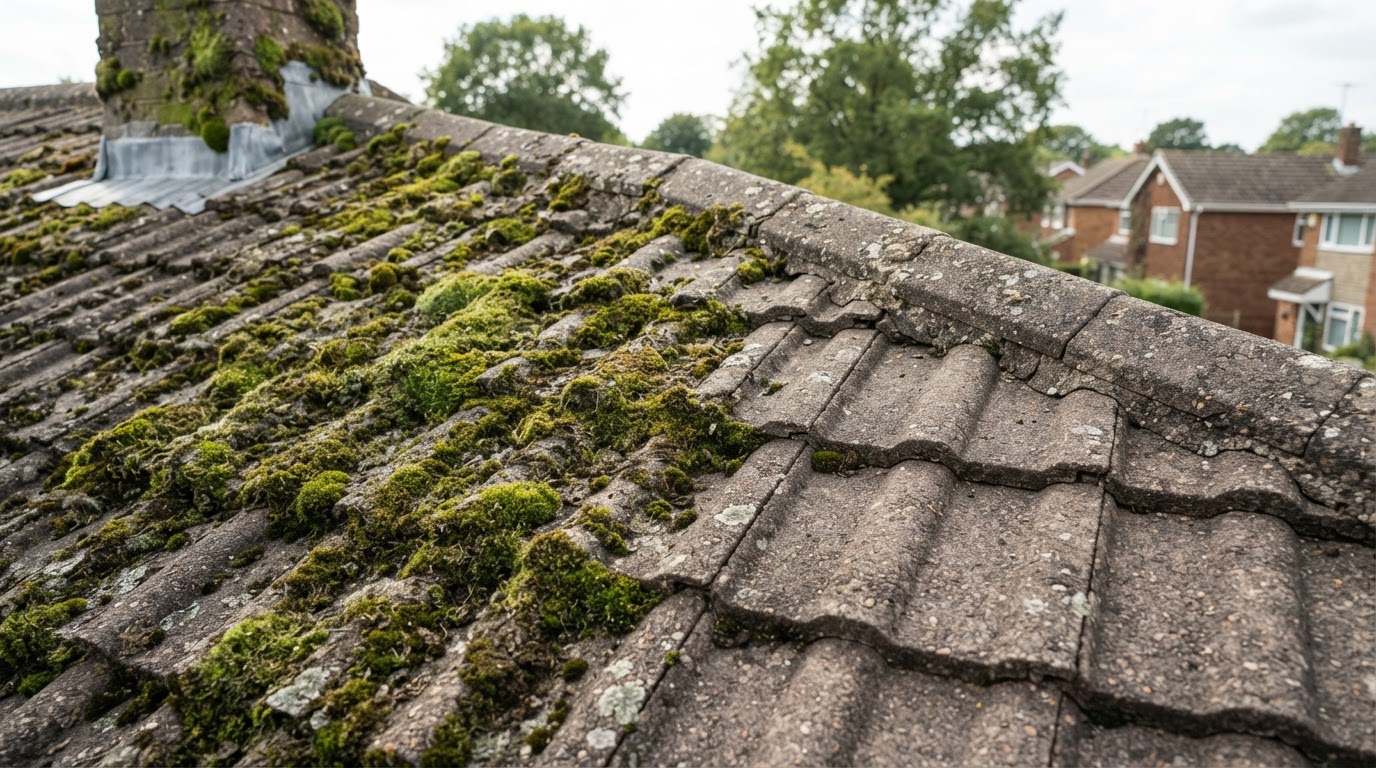
Moss is an extremely common sight on roofs throughout the UK.
Our damp climate, frequent rainfall and relatively mild temperatures create favourable conditions for moss, algae and lichen to grow on roof tiles.
Over time, this biological growth can develop into thick patches of moss that affect the appearance of your property and accumulate around gutters and drainage channels.
Having your roof professionally cleaned can make an enormous difference, often revealing roof tiles that have been hidden beneath years of contamination.
But there's an important question that many homeowners forget to ask.
Once your roof has been cleaned, how do you stop the moss from coming back?
At Supreme Exterior Clean, our recommendation is straightforward: following a professional roof clean, we generally recommend an annual preventative biocide treatment to help keep biological growth under control.
Here's why.
Why does moss grow on roofs in the first place?
Moss thrives in environments where moisture is readily available.
Roof tiles provide an ideal surface, particularly when they are shaded, remain damp for extended periods or have accumulated organic debris.
Several factors influence how quickly moss develops:
- Shade: North-facing roof slopes and areas shaded by trees or neighbouring buildings tend to remain damp for longer.
- Surrounding vegetation: Trees and nearby vegetation can contribute to shade, falling debris and moisture retention.
- Roof tile material: Some roofing materials and weathered surface textures are more conducive to biological growth than others.
- Weather conditions: Britain's relatively damp climate provides plenty of opportunities for moss to establish itself.
- Roof design: Certain roof features can create sheltered areas where moisture and debris accumulate.
This explains why one side of a roof can be heavily covered in moss while the opposite side remains relatively clean.
It also explains why some properties experience moss regrowth much sooner than others.
Does moss return after professional roof cleaning?
Unfortunately, yes.
No cleaning process can permanently prevent moss from growing on a roof exposed to suitable environmental conditions.
Even after the existing moss has been removed, tiny moss spores can be carried onto the roof by wind, rain and other natural processes.
Given enough moisture and suitable growing conditions, new moss can eventually establish itself.
This doesn't mean the original roof cleaning was unsuccessful. It simply means the environmental conditions responsible for the moss haven't disappeared.
The key to keeping a roof clean for longer is to tackle new biological growth before it becomes heavily established.
That's where preventative biocide treatments can make a significant difference.
What is a roof biocide treatment?
A biocide is a specialist chemical treatment designed to control biological organisms such as moss, algae and certain types of lichen.
Professional roof-cleaning biocides are applied using suitable low-pressure equipment and are selected according to the roofing material and the contamination present.
Unlike conventional pressure washing, which relies primarily on the mechanical force of water, a biocide treatment works chemically on biological growth.
Depending on the product, treatment can control existing microorganisms and help delay the development of new growth.
Some treatments also leave a residual effect that continues to discourage biological growth for a period after application.
However, this residual protection gradually diminishes due to weathering and environmental exposure.
Biocides are not permanent barriers against moss.
This is why ongoing preventative maintenance can be beneficial.
Why we recommend annual biocide treatments
At Supreme Exterior Clean, we believe it's better to prevent heavy moss growth than repeatedly allow it to develop and then undertake another major clean.
After an initial professional roof clean, our preferred maintenance approach is an annual assessment and, where suitable, a preventative biocide application.
There are several advantages to this approach.
1. Control moss before it becomes established
New biological growth is generally easier to manage when it is in its early stages.
An appropriately timed maintenance treatment can control developing moss and algae before they form substantial deposits.
This helps preserve the results of the original clean.
2. Reduce the need for another major roof clean
Removing thick, established moss can be a labour-intensive process.
It may involve specialist access equipment, manual removal, debris collection and chemical treatment.
By keeping biological growth under control through regular maintenance, we aim to extend the time between these more substantial cleaning operations.
For many properties, this could mean avoiding another major clean for a considerable number of years.
3. Reduce repeated physical cleaning
Whenever a roof is physically cleaned, care must be taken to protect the tiles and their surface finishes.
Some roofing materials are particularly vulnerable to aggressive pressure washing or inappropriate scraping.
A suitable preventative chemical treatment generally involves much less mechanical disturbance than repeatedly removing heavy moss deposits.
4. Maintain the appearance of your property
A clean roof can make a substantial difference to the overall appearance of a building.
Rather than allowing several years of moss and algae to accumulate, preventative treatments can help maintain a cleaner appearance over time.
5. Make roof maintenance more predictable
An ongoing maintenance programme also gives homeowners the opportunity to have the visible condition of their roof and associated drainage areas periodically reviewed.
Potential concerns such as accumulated debris, blocked gutters or visible damaged tiles can be identified and brought to the homeowner's attention.
This doesn't replace a professional roofing inspection, but it can provide a useful additional opportunity to identify maintenance issues.
Do all roofs need treating every year?
Not necessarily.
Although we generally recommend annual preventative treatment as part of our premium roof maintenance programme, the most appropriate frequency depends on the property.
For example, a north-facing roof surrounded by mature trees may experience biological growth considerably faster than a south-facing roof receiving plenty of sunlight.
Similarly, certain roof coverings and manufacturer-approved treatments may provide effective control for several years.
In these circumstances, a professional inspection may establish that another chemical application isn't yet necessary.
Our objective isn't to apply chemicals unnecessarily. It's to keep your roof in good condition using an appropriate maintenance schedule.
For homeowners who want to keep their roof as clean as possible, annual maintenance provides a convenient opportunity to assess its condition and treat early growth where required.
What's the difference between roof cleaning and roof maintenance?
It's useful to think of these as two separate services.
Initial roof cleaning
An initial roof clean is designed to address established contamination.
Depending on the condition and construction of the roof, this may involve removing substantial moss deposits, clearing accumulated debris and applying a specialist treatment.
The work can be relatively labour-intensive, particularly where moss growth is extensive or access is difficult.
Annual preventative maintenance
Once the roof has been cleaned, subsequent visits can be much simpler.
Rather than removing thick deposits of moss, the focus is on checking the condition of the roof and applying an appropriate biocide treatment where needed.
This generally involves considerably less physical cleaning than the initial restoration.
It's the difference between allowing a problem to become established and managing it before it reaches that stage.
How long can a roof stay clean with annual treatments?
There isn't a single answer that applies to every property.
The longevity of a roof clean depends on the type of roof tiles, the surrounding environment, local weather conditions and the effectiveness of the treatments used.
Some roofs may remain relatively free of moss for many years following a professional clean and appropriate preventative maintenance.
Others, particularly those exposed to heavy shade and persistent moisture, may require more regular attention.
The purpose of annual maintenance is to give the roof the best practical opportunity to remain clean without needing repeated major cleaning work.
Although we cannot guarantee that moss will never return, a suitable maintenance programme can help control biological growth and extend the results of professional cleaning.
Can you apply roof moss treatments yourself?
Biocide products are available for domestic use, but roof treatment is not necessarily a straightforward DIY task.
Working at height presents obvious risks, particularly on sloping, wet or fragile roof surfaces.
There are also chemical safety considerations.
Some biocides can be harmful to plants, aquatic life or other organisms if they are used incorrectly.
Professional contractors must consider product suitability, application conditions and the protection of surrounding areas, including gardens, drainage systems and watercourses.
Certain roofing materials may also require specific cleaning products or methods to avoid affecting their finishes or warranties.
For these reasons, we recommend using a competent professional who understands both the roofing material and the chemical treatment being applied.
When is the best time of year to treat roof moss?
Roof biocide treatments can often be carried out at different times of the year, provided the conditions are suitable for the product being used.
Application requirements vary, but factors such as rainfall, temperature, wind and surface condition can influence the effectiveness of a treatment.
For example, heavy rainfall shortly after application may reduce the contact time of certain products.
A professional contractor should select a suitable treatment window according to the manufacturer's instructions and the prevailing weather conditions.
For most homeowners, the important factor isn't choosing a particular month but ensuring that the treatment is applied correctly and at an appropriate maintenance interval.
The best way to keep a roof clean is to prevent moss becoming established
When homeowners invest in professional roof cleaning, they naturally want the results to last as long as possible.
But leaving a freshly cleaned roof completely untreated for years can allow the same biological growth to gradually return.
At Supreme Exterior Clean, we prefer a more proactive approach.
Following the initial clean, we generally recommend an annual preventative roof maintenance programme, incorporating a condition assessment and suitable biocide treatment where appropriate.
This allows us to control developing biological growth before it becomes a major problem.
Our philosophy is simple: it's better to maintain a clean roof than repeatedly restore a heavily moss-covered one.
Keep your roof cleaner for longer with Supreme Exterior Clean
Whether your roof is already heavily covered in moss or you've recently had it professionally cleaned, our team can recommend an appropriate cleaning and maintenance programme.
We use specialist equipment and carefully selected treatments designed to manage biological growth while respecting the roof covering.
If you'd like advice, simply send us a few photographs of your roof via WhatsApp.
We'll help you understand whether it needs a full clean, a preventative treatment or simply monitoring.
Request a Roof Cleaning or Maintenance Quotation
Send us a few photographs of your roof and our team can advise on the most appropriate cleaning and maintenance programme for your property.