
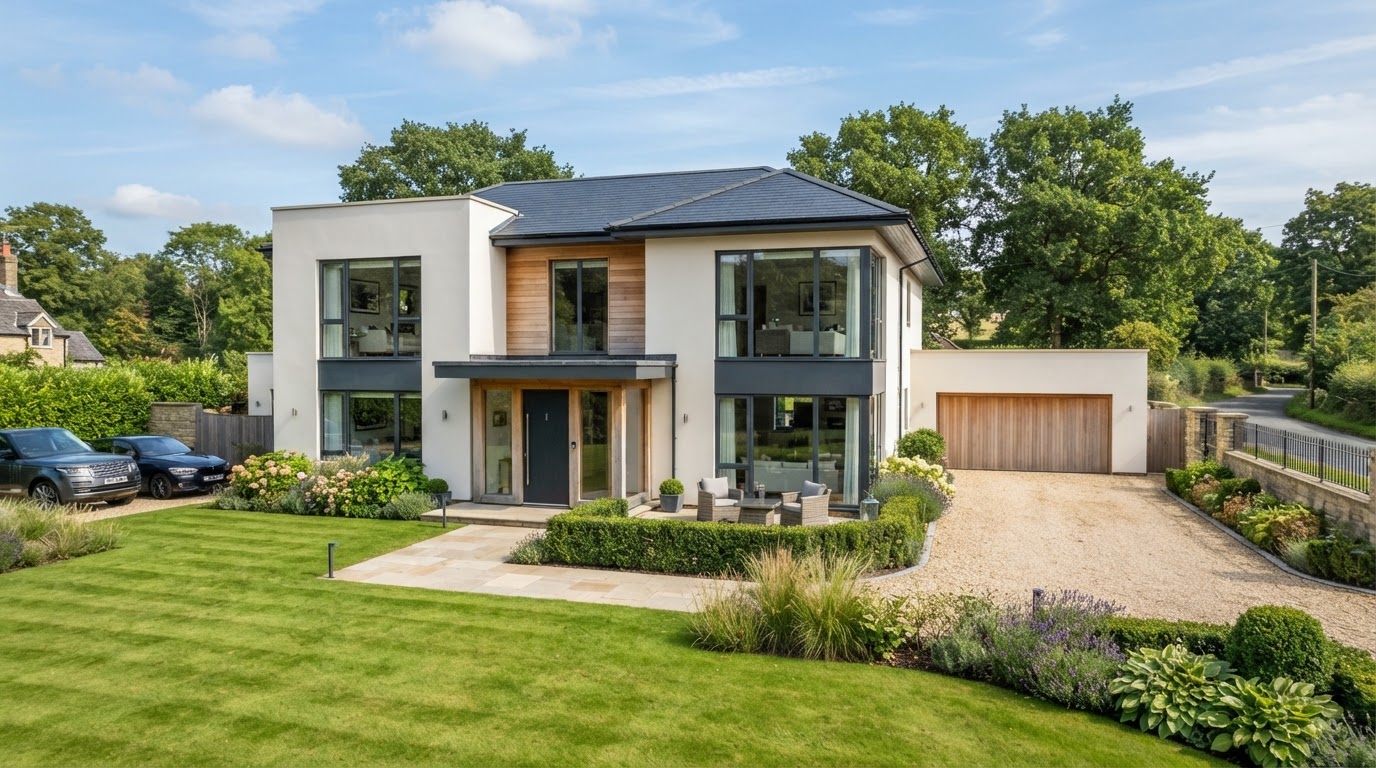
If the render on your home has become covered in green algae, red staining or unsightly black marks, you're probably wondering how much it would cost to have it professionally cleaned.
The good news is that restoring the appearance of your property may be considerably more affordable than you think.
At Supreme Exterior Clean, professional render cleaning typically costs between £100 and £300 per elevation, depending on the size, accessibility and condition of the surface.
However, every property is different, and several factors can influence the final quotation.
In this guide, we'll explain how render cleaning is priced, what you should expect from a professional service and why choosing the correct cleaning method is just as important as the price.
How much does render cleaning typically cost?
For most straightforward residential render cleaning projects, Supreme Exterior Clean generally charges between £100 and £300 per elevation.
An elevation simply means one exterior side of a building, such as the front, rear or either side of your property.
For example, a typical detached house may have four elevations, although not every elevation will necessarily be rendered or require cleaning.
Here are some illustrative prices based on our usual charging range:
| Cleaning requirement | Indicative cost |
|---|---|
| One elevation | £100–£300 |
| Two elevations | £200–£600 |
| Three elevations | £300–£900 |
| Four elevations | £400–£1,200 |
These figures are intended as a general guide rather than fixed quotations. They assume the usual price range applies to each elevation, and they do not account for any combined-job pricing, unusual access requirements or additional specialist treatments.
Larger buildings, heavily contaminated surfaces or properties requiring specialist access equipment may cost more.
The important thing to understand is that not every property needs all its render cleaned. If only one or two elevations are affected by biological staining, it may be possible to clean those areas without treating the entire building.
Why do render cleaning prices vary?
Although two properties may look similar, the work involved in cleaning their render can be quite different. Several factors influence the cost:
1. The size of the elevation
A small section of render on a bungalow will generally require less time and cleaning solution than a large elevation on a three-storey house.
The overall surface area is therefore an important consideration. However, size isn't the only factor, and a larger surface doesn't always mean a proportionately higher price.
2. The extent of contamination
Some rendered buildings develop relatively light green algae, while others can become heavily covered in red biological staining, black deposits or stubborn lichen.
Light biological contamination can often be treated relatively efficiently. More established or unusual staining may require additional treatments, longer contact times or a different cleaning approach. The type and severity of contamination can therefore affect the price.
3. Accessibility
Access can make a significant difference to the complexity of the work. For example, cleaning an easily accessible ground-floor elevation is generally more straightforward than treating a high wall above a conservatory or extension.
Depending on the building, suitable access might involve high-reach application equipment, mobile elevated work platforms or scaffolding. Where additional access arrangements are necessary, these may affect the quotation.
4. The type and condition of render
Not all render systems are the same. Silicone, acrylic, monocouche and traditional cement-based renders have different properties and can require different cleaning methods.
Certain surfaces are also more vulnerable to mechanical damage or chemical incompatibility than others. At Supreme Exterior Clean, we assess the render before selecting the most appropriate treatment. A surface requiring a specialist cleaning process may involve more work than a straightforward biological treatment.
5. The cleaning method required
For many rendered buildings affected by algae and other biological growth, our preferred approach is a process known as softwashing. This involves applying carefully selected cleaning solutions at low pressure to treat the contamination without relying on aggressive mechanical force.
However, some staining requires a different or more specialised approach. The treatment selected will depend on the render system and the nature of the deposits.
Is it cheaper to clean render than repaint it?
In many cases, yes — and the difference can be substantial.
One of the biggest misconceptions about discoloured render is that the original finish has deteriorated and needs repainting. Often, however, the colour is simply hidden beneath biological contamination.
Green algae, red staining and atmospheric dirt can make a relatively sound rendered surface look tired and neglected. When these deposits are successfully removed, the original appearance of the render can often be substantially restored.
Professional cleaning may therefore avoid the need for repainting, which can involve extensive surface preparation, materials, labour and access equipment. This is particularly relevant to through-coloured render systems such as K Rend, where the original finish is designed to provide its colour without routine painting.
Of course, cleaning cannot repair damaged render or reverse permanent colour deterioration. But where the problem is primarily surface contamination, having the render professionally cleaned should generally be considered before committing to the expense of repainting.
Related Guide
Can K-Rend Be Cleaned Without Repainting? Read our dedicated guide on why through-coloured render responds remarkably well to specialist biological restoration.
Can I save money by pressure washing the render myself?
Buying or hiring a pressure washer might initially seem like a cheaper alternative to professional render cleaning. Unfortunately, using the wrong equipment or technique can create a far more expensive problem.
Concentrated high-pressure water jets, particularly those produced by 0-degree or aggressive rotary nozzles, can physically score or erode rendered surfaces. This can leave permanent lines, grooves and uneven textures. Some damage may only become obvious once the render has dried.
And unlike dirt or algae, physical damage cannot simply be washed away. In certain cases, the affected areas may require specialist repairs or replacement of the render finish.
Chemical cleaning also presents risks if the wrong products are used or applied incorrectly. For these reasons, we recommend choosing a contractor who understands the render system, the contamination and the appropriate cleaning process. Saving money on cleaning isn't much of a saving if the result is an expensive render repair.
Related Guide
Why Pressure Washing Your Render Could Be an Expensive Mistake — examine the risks of mechanical pressure versus biocidal treatment.
How long does professional render cleaning take?
The time required depends on the size of the property, accessibility, cleaning method and degree of contamination.
A relatively straightforward residential elevation may be completed during a short visit, while larger properties or heavily contaminated surfaces may require considerably more time.
Some treatments produce an immediate visual improvement. Other specialist biocidal treatments continue working after application, with residual biological staining gradually diminishing through subsequent weathering. This means the full cleaning result may not always be apparent on the day of treatment.
Before work begins, we explain the proposed cleaning method and what you can reasonably expect afterwards.
How often will I need to pay for render cleaning?
One of the advantages of professional render cleaning is that it isn't necessarily something you'll need every year.
How quickly a wall becomes dirty again depends heavily on its environment. For example, a south-facing elevation receiving plenty of sunlight may remain relatively clean for ten years or longer. Meanwhile, a north-facing wall surrounded by mature trees could develop biological growth considerably sooner.
Moisture, shade, exposure and surrounding vegetation all influence the rate of contamination. Appropriate cleaning treatments can also help delay biological regrowth.
At Supreme Exterior Clean, we don't believe in recommending unnecessary annual cleaning. Instead, we advise homeowners to have their render assessed and treated when its condition justifies it. For many properties, professional render cleaning is an occasional maintenance expense rather than a frequent recurring cost.
Is professional render cleaning worth the money?
For homeowners whose render has become noticeably discoloured, professional cleaning can offer several benefits:
- Improved kerb appeal: Dirty render can make an otherwise attractive property look poorly maintained. Removing accumulated biological growth and atmospheric staining can significantly improve its appearance.
- Potential savings compared with repainting: Where the render is structurally sound and the staining is removable, cleaning may eliminate the need for a more expensive decorative treatment.
- Appropriate care for the material: A professional contractor should understand how different render systems respond to cleaning methods and chemicals. This reduces the risk of unnecessary damage caused by inappropriate cleaning.
- Long-lasting results: Depending on the property's environment and the treatment used, the improvement may last for several years.
- Protecting the appearance of your property: Regular assessment and cleaning when required can help maintain the appearance of the building without allowing heavy contamination to accumulate.
How do I get an accurate render cleaning quotation?
The easiest way to obtain a quotation is to provide photographs of the affected areas.
At Supreme Exterior Clean, we can often assess straightforward residential render cleaning enquiries using photographs supplied through WhatsApp or our online assessment form.
Ideally, we'd like to see:
- A photograph showing the whole elevation that needs cleaning.
- A closer photograph showing the type and extent of staining.
- Any obstacles or access restrictions, such as conservatories, extensions or narrow passageways.
We may also ask a few questions about the property and the type of render. For more complicated projects, larger buildings or unusual contamination, a site visit may be necessary before we can provide a reliable quotation.
This helps us recommend an appropriate cleaning method and give you a price based on the work actually required.
Professional render cleaning from £100–£300 per elevation
If your rendered property has become covered in green algae, red staining or other unwanted deposits, professional cleaning could restore its appearance without the need for repainting.
At Supreme Exterior Clean, our typical residential render cleaning prices range from £100 to £300 per elevation, with the final cost depending on the property's size, condition, accessibility and cleaning requirements.
We use specialist cleaning treatments and carefully selected equipment to achieve effective results while protecting the underlying render.